Weddings
How to Write Wedding Vows That Sound Amazing on Video
Write vows that feel personal and sound clear on a wedding film: structure, drafting aloud, delivery, microphone placement and working with your officiant and DJ.
By Legend Photo & FilmUpdated 9 min read

Your vows are the emotional center of the ceremony, and in a wedding film they are the sound people replay. Words that feel powerful in a quiet room do not always come across the same way on a recording, because pace, clarity and length matter more once a microphone is involved. This post is about writing vows that feel like you and also listen well later, and about the production side that supports them: where microphones go, how to work with your officiant and DJ, and how to deliver the words calmly.
You do not need to perform. A recording picks up sincerity very well, and most of what follows is about giving that sincerity a little structure.
Why write your vows with video in mind
Vows are for your partner and your guests, and they are also one of the most important moments in your film. A guest in the third row hears your voice in the room. A viewer five years from now hears the recording, with no room around it, and may be listening alone with headphones. That second listener cannot see your face the way the first one could, so the words have to carry more of the moment.
When we plan a ceremony, we think about the vows as a short piece of audio that has to stand on its own inside the film. In practice that means three things. The words should be easy to follow on a single hearing. The length should leave room for the rest of the ceremony. And the delivery should be at a pace a microphone can capture cleanly.
If you are still deciding between a private exchange and a spoken one in front of guests, the choice is yours and either can be filmed well. We only ask that you tell us your plan, because it changes how we set up sound and where we stand.
Five steps to writing your vows
1. Start with a story, not a list
Promises are common, so a story is what makes yours different. Open with the moment you knew, or a small memory that shows how the two of you are together. A specific scene gives the listener something to picture: getting caught in the rain at a favorite park and dancing anyway, for example. A promise that follows a scene like that lands harder than one that stands alone.
2. Keep it short and structured
Aim for about a minute and a half to two minutes when spoken. A reliable shape is a short personal story, a few lines about what you love in your partner, three to five sincere promises, and a closing line you can say slowly. If you write a full page and read it aloud, you will probably find that it runs longer than you expected. Cut the weakest paragraph first.
3. Write the way you speak
Use plain, conversational language in your own words. If a sentence is hard to say aloud, it will be harder to say while nervous. Words you would never use at dinner tend to sound stiff on a recording. Contractions are fine, and so is a short sentence.
4. Use specific, vivid images
Small daily habits make emotion visible and audible: how your partner makes coffee, the song they hum, the way they wait at the door. Specific details are stronger than general phrases such as "you make me happy". They also give your guests a reason to smile, which the film will pick up.
5. Practice out loud
Reading silently hides awkward phrases. Say the vows aloud, then record yourself on your phone and listen back. You will notice where you rush, where a line is too long to say in one breath, and where a word keeps tripping you. Revise those parts, then read again until the vows feel familiar rather than memorized.

Drafting aloud: a simple way to work
It can be easier to speak first and write second. Try a short routine:
- Set a ten minute timer and talk through why you are marrying this person, as if telling a friend
- Record it on your phone without stopping to fix anything
- Listen back and write down the sentences you would be glad to hear again
- Arrange those sentences into the shape of story, appreciation, promises and a closing line
- Read the result aloud and trim anything that makes you stumble
This method keeps your natural rhythm. It also helps if writing makes you freeze, because you begin with talking, which most people find easier.
When and where to write
Plan to write your vows at least two to three weeks before the wedding so there is time to refine and rehearse. The last week is busy, and a vow written the night before tends to ramble or fall flat. Some people write early in the morning with coffee, others near a place that matters to them, such as where they got engaged. Choose a spot where you feel calm.
Delivering your vows on camera
Delivery is where good writing either lands or gets lost. These are the habits we suggest.
Speak clearly and steadily
You do not need to project as if you were on a stage. A steady pace and normal breaths are enough, because the microphone is close. Nerves speed people up, so start slower than feels natural.
Pause for emotion
A pause lets the moment land. It also gives the camera time to hold on your partner's face, which is often the shot people love most. If your voice catches, wait. The recording will treat that silence as part of the vow.
Look at your partner, not at the lens
You are not speaking to the camera. We position ourselves so your eyes can stay with your partner, and our job is to find the angle. Hold your cards or phone low enough that your face stays visible, or memorize the first and last lines so you are looking up at the beginning and the end.
Skip long quotes and references
Quotes and film references often do not land in audio, especially for guests who do not recognize them. Paraphrase and make the idea personal. The same goes for inside jokes: they can leave guests out and do not always age well on video.
Microphones: how we think about vow audio
Clear audio is a planning job, not a hope. When we plan a ceremony, we coordinate audio setup and microphone placement with you before the day, and we ask a few things first. Where will you stand? Will the officiant have a microphone? Is there a house sound system, and who controls it? Is the ceremony indoors or outdoors?
These answers shape the options:
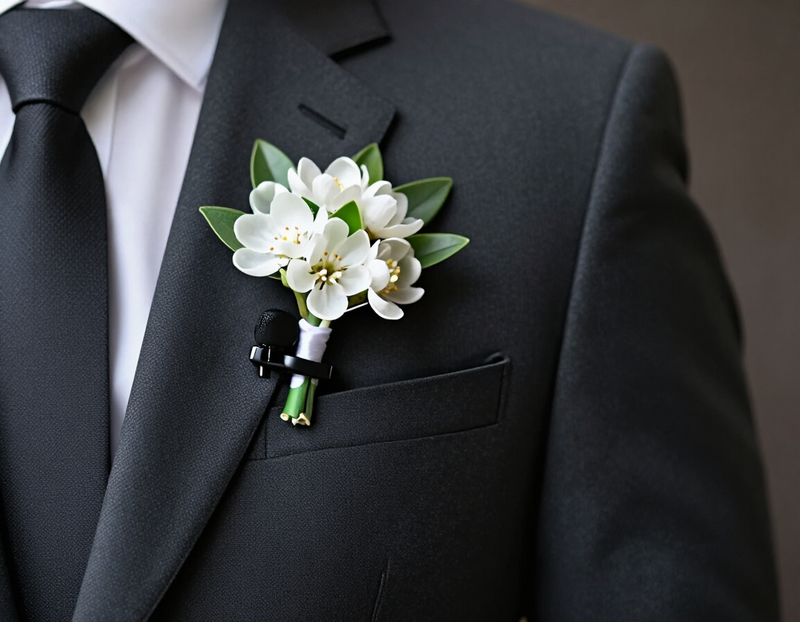
- A small wireless microphone on each person can capture vows even if you speak softly
- A microphone near the officiant or lectern can capture a spoken exchange
- A recorder placed close to the speakers can serve as a backup
- Outdoors, wind and nearby traffic can change what is practical, so we plan for them early
With a handheld microphone, hold it below your chin and speak across it, not into it. With a lapel microphone, let it do the work and avoid touching your chest or collar. If anything about the setup feels uncomfortable, say so before the ceremony, not during it. Ask where the microphone will be and test the volume with your videographer beforehand.
Working with your officiant and DJ
Your film's sound depends on more people than the couple. We find it helps to talk to the officiant and the DJ before the day, with your permission.
With the officiant, we ask how the ceremony will flow, when the vows come and whether they prefer a microphone on a stand or clipped to clothing. Some officiants have strong preferences, and we plan around them. We also ask whether they will prompt you line by line or let you speak freely, because line-by-line vows are recorded in short pieces that take different editing.
With the DJ or sound technician, we ask how the system is set up, whether we can take a feed from it, and who will adjust volume. If the ceremony includes music under the vows, agree on the level in advance, because music beneath a quiet voice can make the words harder to hear later. A short conversation here prevents most audio surprises.
Common mistakes
- Writing at the last minute, which often leads to rambling or flat vows
- Reading too fast because of nerves
- Including inside jokes that guests cannot follow
- Forgetting the microphone, then turning away from it mid-sentence
- Printing the vows in a tiny font that makes you squint downward
- Never saying them aloud before the ceremony
Every one of these is easy to avoid with a little preparation. If you are not sure, ask us to walk through the ceremony space and talk about where you will stand.
Ambience: what the film hears besides your voice
The room is part of the recording. A breeze, a gasp from a guest or a quiet laugh after a funny line can make the audio feel alive. We avoid cleaning all of that away, and in the edit we usually let the room breathe around the words. This is another reason to leave room between lines. A short pause gives the ambient sound a place to sit, and it gives the editor natural spots to cut between your face and your partner's.
If your venue is noisy, such as an open space with traffic or a building with an air handler, tell us. We can move the microphone closer, plan a quieter position, or look at the timing of the ceremony. Noise is easier to plan around than to fix later.
Which moments should we make sure to capture?
Every couple's list is different. Moments people often name include the vows, the ring exchange, the first kiss and the reaction on a parent's face. Tell us your priorities in advance, so that we can place cameras and microphones to protect them. Our wedding video shot list helps you name the moments you would miss, and our timeline tips for your videographer explain how the schedule gives them room.
Privacy: keeping your vows to yourselves
Some couples write their vows privately and agree to keep them secret until the ceremony. If you do that, keep the reveal for the day and let us know. Others prefer a private moment before the ceremony with only the two of you, and we can discuss how, or whether, that is recorded. Some couples ask us to capture the vows and share them only with the two of them. Decide what you are comfortable with, and tell us at the start. We would rather adapt the plan than record something you wanted to keep private.
How vows appear in the finished film
Your real voice can carry the highlight film, and you can choose to hear a few lines of the vows under the visuals of the ceremony. We can also discuss other versions of the edit, such as an extended highlight or a full ceremony film. Our post on teaser, highlight and full-length films shows how each version uses the audio differently, and our post on what wedding videography costs in Connecticut explains how those choices shape a quote.
A short checklist before the ceremony
- Vows finished at least a couple of weeks ahead
- Read aloud at least three times, once recorded on a phone
- Cards or phone ready, printed large enough to read
- Officiant and DJ told how the vows will be recorded
- Microphone plan agreed with your videographer
- A slow breath planned before the first line
Questions couples ask us
Should our vows be the same length?
It helps. Similar lengths keep the ceremony balanced, and the edit can treat both speakers equally.
Can we read from a card?
Yes. A card is better than forgetting a line. Hold it low and look up often.
Can we do vows privately and still have audio?
Often yes. Tell us what you want, and we will plan the microphone and position.
What if we cry?
Pause, breathe and continue when ready. The pause is part of the moment.
Plan your vow audio with us
If you are planning a wedding film and want vows that sound as good as they feel, tell us about your ceremony. Our wedding videography page explains how we approach the day, and our packages page shows how photo and video coverage fit together.