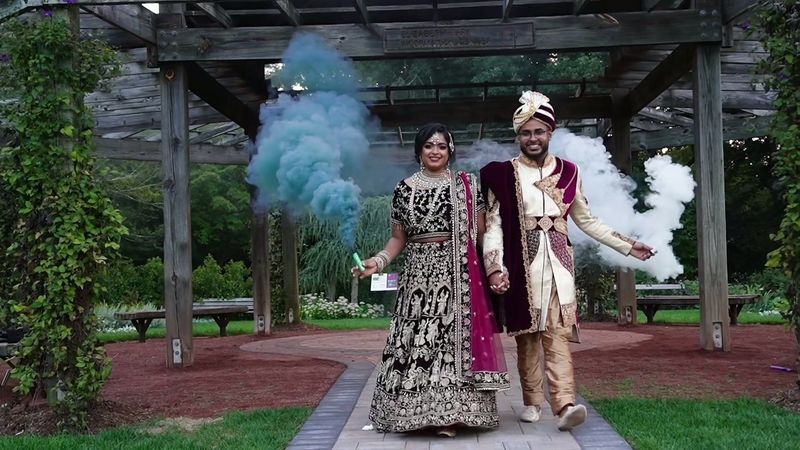
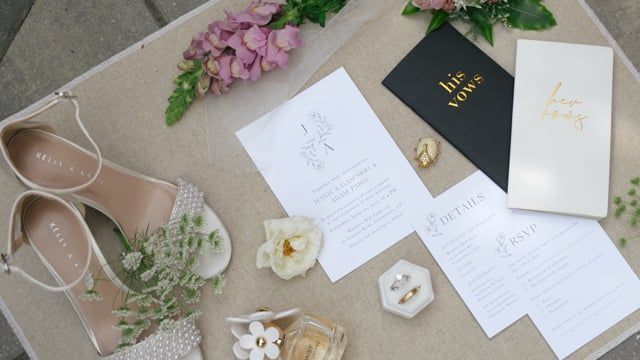
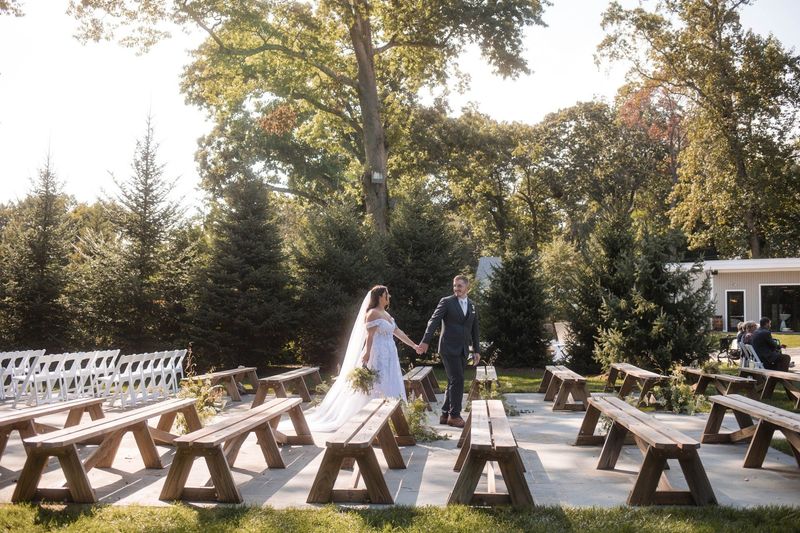
Most wedding videos run in the order of the day. This one does not. It keeps coming back to the ceremony, cutting it through the garden portraits, the indoor dance and the reception, so that the ceremony works like a refrain. The result is a 4:17 video that contrasts a quiet garden with a loud party, and it is easier to understand once you see why the ceremony keeps returning.
5 minute read
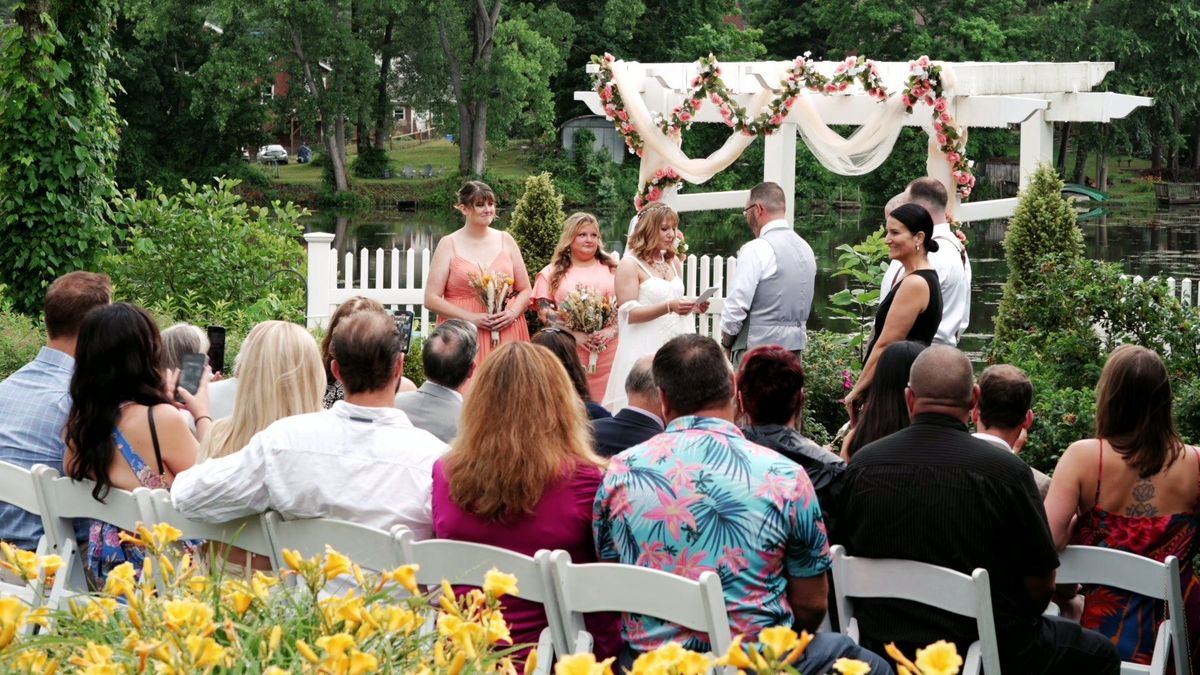
A garden, a fountain and a floral pergola
The setting is a garden with a fountain and a pergola draped in flowers. The pergola is where the ceremony takes place, and it becomes the video’s visual anchor. The frame below, from about sixteen seconds in, shows guests watching the ceremony beneath it.
It is a film-only story: the page describes the finished video and its stills.
The garden’s structure helps the viewer. A recognisable frame, here a pergola with flowers, lets the audience know where they are even when the video has cut away to a different scene and returned.
Why the ceremony keeps returning
The most important thing to know about this video is that the ceremony is intercut. A bride approaches, someone reads from a sheet of paper, guests watch, and the couple kisses, but these moments are not delivered as a single block. They return throughout the video, between other scenes.
That means the video is not in strict chronological order. The ceremony is a recurring anchor, a thread the editor keeps picking up, and the other scenes hang from it.
For a viewer, this solves a real problem. A highlight video can feel like a stack of unrelated clips. Returning to the ceremony tells the viewer that all of the other scenes belong to the same day, and it gives the video a centre of gravity.
It also changes how the video should be watched. A viewer does not need to wait for a vow or a kiss to arrive in order; each time the ceremony returns, it adds one more detail to a picture that is already clear. The flow of the video is a loop that widens, not a line.
A bride approaches, and someone reads from a paper
Two ceremony moments are easy to describe. A bride approaches the pergola, and a person reads from a sheet of paper.
These moments are brief and visual: a figure walking toward the pergola, a person with a page in their hands. They are enough to establish that a ceremony is underway, and the video trusts that the viewer needs no more.
Our guide to ceremony coverage explains how we think about the aisle, the exchange and the kiss, which are the same beats the video returns to.
Garden portraits: the couple together, and a bride alone
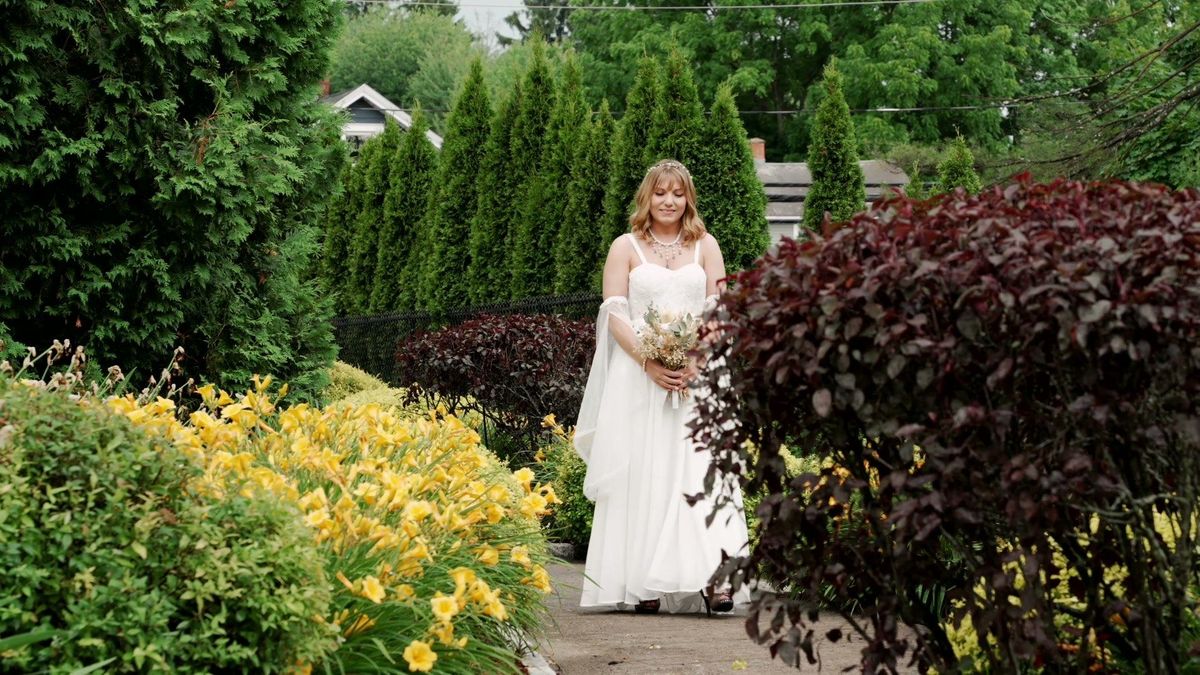
Between ceremony moments, the video spends time in the garden with the couple. The frame that introduces this page, at about fifty-nine seconds, shows Tyler and Sara smiling together during portraits. The frame below, from about two minutes, shows Sara by herself with her bouquet.
The contrast is useful. Together, they look relaxed and close. Alone, Sara stands with her bouquet in the garden, a single figure in a green space. The two kinds of portrait give the video a rhythm of company and stillness.
These scenes are the quiet half of the video’s contrast. The garden is calm; nothing moves quickly, and the editing lets the shots run before cutting back to the ceremony.
For how couple portraits fit into a wedding day, see couple and bridal portraits.
An indoor dance, together
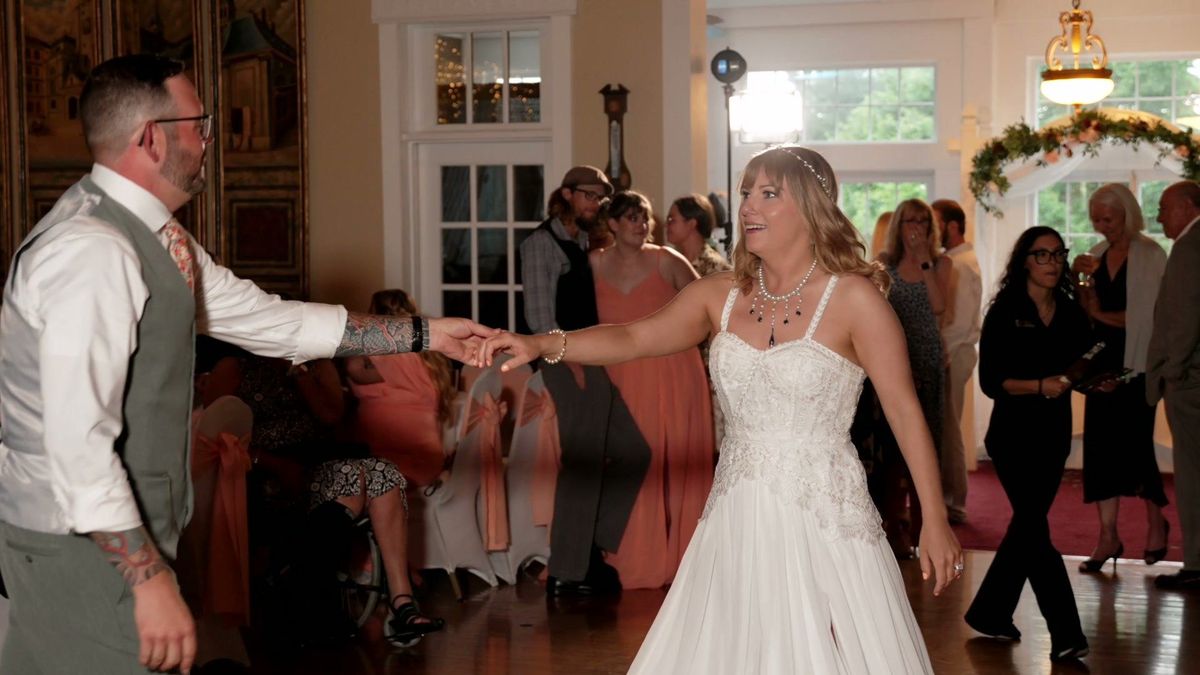
At about two minutes twenty-five, the video moves indoors. Tyler and Sara dance together, in the frame below. The change of location signals a change of mood.
The garden scenes are open and bright; here the walls close in, the couple is the whole picture, and the guests’ attention gathers around their movement. What is visible is a couple dancing together in a room, close to each other and to the camera, with the movement itself carrying the scene. For a viewer, the shift from open air to an interior makes the dance feel like a private moment shared with the guests. If you are planning a dance moment, our first-dance guide covers how we approach it.
Reception dancing and a louder video
After the indoor dance, the video shifts into the reception, where guests dance. The pace quickens, the cuts get shorter and the scenes become more crowded. This is the video’s loud half, and it is deliberately set against the stillness of the garden.
Contrast is the main device. A quiet scene feels quieter when it follows a party, and a party feels bigger when it follows a long look at a still garden. The video uses both to give each a sharper identity.
- Garden scenes: wide, patient and calm.
- Ceremony fragments: the recurring anchor, brief and focused.
- Indoor dance: a change of room and a closer frame.
- Reception: shorter cuts and more people.
Ending with a kiss beneath the pergola
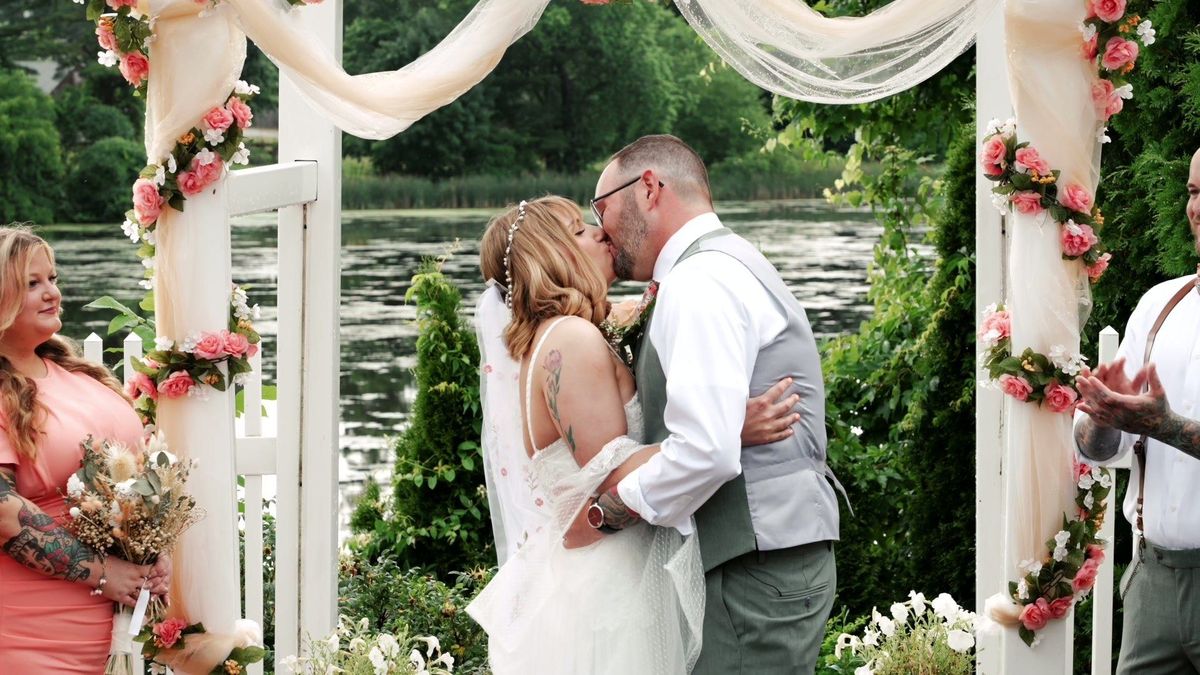
The video closes on a kiss at the pergola, the frame below from about four minutes. After all the cutting between locations, it brings the viewer back to the place the video started, the ceremony structure itself.
That ending explains the whole design. The ceremony is the anchor, and the video finishes by returning to it. A viewer who has watched all four minutes understands, in retrospect, why the ceremony kept coming back.
What this structure does for the viewer
For someone who was there, the video recalls the day and its mood. For someone who was not, it explains the garden, the people and the contrast between calm and celebration in under five minutes. Because the ceremony returns, neither viewer has to track a clock.
The finished result is a 4:17 landscape video. To see how we plan wedding video coverage, visit our wedding videography page, or compare options on the video and photography page.